The Prophetic Hadiths About Dates and Their Importance in Muslim Life
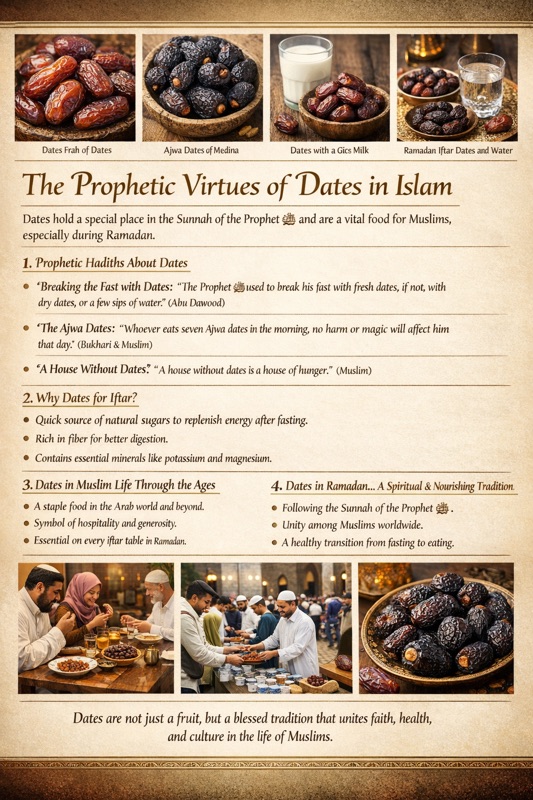 Dates hold a special and honored place in Islamic tradition. They are not merely a fruit commonly eaten in the Arab world; rather, they are deeply connected to the Sunnah of Prophet Muhammad ﷺ and have become an essential food for Muslims at all times—especially during the blessed month of Ramadan.
Prophetic Hadiths About Dates
Several authentic hadiths mention the virtues and importance of dates:
One well-known narration states that the Prophet ﷺ used to break his fast before prayer with fresh dates (rutab). If fresh dates were not available, he would eat dry dates, and if those were unavailable, he would take a few sips of water. This hadith highlights the recommendation of beginning iftar (breaking the fast) with dates.
Another famous hadith mentions Ajwa dates. The Prophet ﷺ said:
“Whoever eats seven Ajwa dates in the morning will not be harmed that day by poison or magic.”
This narration, reported in Sahih al-Bukhari and Sahih Muslim, emphasizes the unique virtue of Ajwa dates, particularly those from Madinah.
In another narration, the Prophet ﷺ said:
“A house without dates is a house whose people are hungry.”
This powerful statement illustrates how essential dates were in daily life and how they symbolized sustenance and blessing.
The Wisdom Behind Breaking the Fast with Dates
The Prophetic practice of breaking the fast with dates carries profound health wisdom that modern nutrition science has confirmed:
- Dates contain natural sugars that are quickly absorbed, helping restore energy after long hours of fasting.
- They are rich in fiber, which supports healthy digestion.
- They provide essential minerals such as potassium and magnesium.
- They gently prepare the stomach for further food intake after a day of fasting.
Thus, dates combine spiritual guidance with physical benefit.
Dates in Muslim Life Throughout History
Since the early days of Islam, dates have been a staple food in Muslim societies, especially in the Arabian Peninsula. Over time, their cultivation spread to many Muslim-majority regions such as Iraq, Egypt, North Africa, and beyond.
Dates became a symbol of hospitality and generosity. They are commonly offered to guests and distributed in charity. Due to their affordability, long shelf life, and high nutritional value, they are ideal for feeding families and providing meals for those in need.
Dates in Ramadan: A Spiritual and Nutritional Tradition
During Ramadan, almost every Muslim household across the world begins iftar with dates and water, following the Sunnah of the Prophet ﷺ. This practice unites Muslims globally in a shared act of worship and remembrance.
Breaking the fast with dates is not merely a cultural habit; it is:
- A revival of a Prophetic Sunnah
- A reminder of simplicity and gratitude
- A source of quick nourishment after fasting
- A symbol of unity among Muslims worldwi
Conclusion
Dates are more than just a fruit. They are a blessed tradition rooted in the teachings of the Prophet Muhammad ﷺ. Across generations and continents, dates have remained a constant presence in Muslim life—especially in Ramadan—uniting faith, health, culture, and spirituality.
In every bite of a date at iftar, Muslims reconnect with their religious heritage and the timeless wisdom of the Prophetic tradition.


Comments
Post a Comment